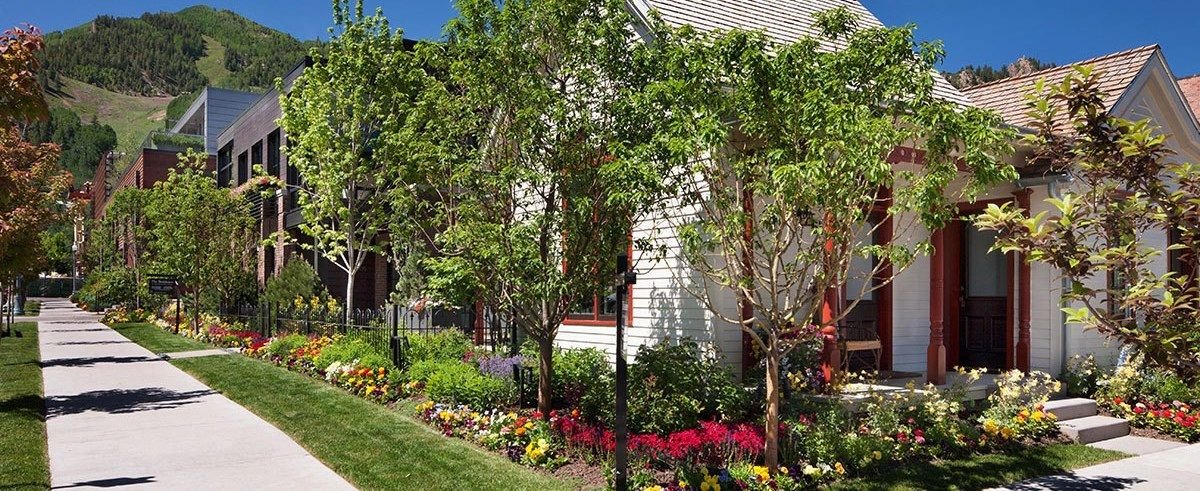
What’s special about downtown Aspen and the smaller zone called “the core”?
Downtown Aspen Core
The Downtown Aspen Core is the heart of Aspen — a rare, walkable blend of luxury residences, penthouses, condominiums, hotels, restaurants, boutiques, galleries, nightlife, skiing, culture, and mountain recreation.
Here, convenience is the luxury. Residents can walk to the Silver Queen Gondola, world-class dining, designer shopping, fine art galleries, spas, the Wheeler Opera House, Belly Up Aspen, Wagner Park, the Rio Grande Trail, and Aspen’s year-round calendar of events. The neighborhood is framed by Aspen Mountain, Red Mountain, Shadow Mountain, and Independence Pass, creating a spectacular alpine setting in the middle of town.
Residential offerings in the Core range from historic homes and charming in-town residences to luxury condominiums, townhomes, and highly finished penthouses. The most sought-after properties combine walkability, views, parking, outdoor space, privacy, and immediate access to Aspen’s restaurants, lifts, and cultural amenities.
Recent sales continue to demonstrate the strength and scarcity of the Downtown Core market. In 2026, the penthouse at 632 East Hopkins Avenue sold for $26 million, or approximately $7,895 per square foot, underscoring the premium buyers place on newer, highly finished penthouse product in the center of town. In another notable Aspen transaction, a renovated downtown residence was reported to be under contract for more than $40 million, further reflecting the demand for irreplaceable in-town locations.
History
Aspen’s story began as a silver mining town. Rich silver deposits brought settlers to the Roaring Fork Valley in the late 1800s, and Aspen quickly became one of Colorado’s most important mining communities. After the silver crash of 1893, the town entered a quieter period as a rural county seat and ranching center.
Aspen’s modern identity took shape in the mid-20th century. Aspen Mountain opened as a ski area in the 1940s, and in 1949, Walter and Elizabeth Paepcke helped bring the Goethe Bicentennial Convocation to Aspen, attracting international thinkers, artists, musicians, and cultural leaders. That moment helped establish Aspen not only as a ski destination, but as a year-round center for ideas, music, art, design, and culture.
Today, the Downtown Core carries that history forward. It is where Aspen’s mining-era architecture, ski-town identity, cultural institutions, luxury hospitality, and global appeal all meet within a compact and highly walkable setting.
Location
Downtown Aspen is located along Highway 82 in the Roaring Fork Valley, approximately 40 miles southeast of Glenwood Springs. The Core is centered around Aspen’s commercial and cultural district, with the Silver Queen Gondola, restaurants, shopping, galleries, hotels, and entertainment all within close walking distance.
Climate
At approximately 7,815 feet in elevation, Aspen enjoys a classic alpine climate with warm summers, crisp evenings, snowy winters, and abundant sunshine.
Population
Aspen remains a small mountain town with global reach. The 2020 U.S. Census recorded Aspen’s population at 7,004, while the Census Bureau’s 2025 estimate is 6,489. Seasonal visitors, second-home owners, commuters, and event traffic can make the daily population feel much larger, particularly during peak winter and summer seasons.
Education
Aspen is served by the Aspen School District. The area also includes private and independent school options, including Aspen Country Day School and Aspen Community School, as well as early childhood and preschool programs.
Medical Services
Aspen Valley Hospital provides local medical care, with additional regional services available downvalley, including Valley View Hospital in Glenwood Springs.
Recreation
The Downtown Core offers immediate access to Aspen’s year-round lifestyle. In winter, residents are minutes — often steps — from Aspen Mountain skiing and snowboarding, with Snowmass, Aspen Highlands, and Buttermilk nearby. Snowshoeing, cross-country skiing, backcountry skiing, and hut trips are also part of the broader Aspen experience.
In summer, hiking, biking, fly fishing, climbing, rafting, kayaking, horseback riding, paragliding, and the Rio Grande Trail are all close at hand. Add Aspen’s festivals, farmers market, music, lectures, art openings, and culinary events, and the Core becomes one of the most dynamic and convenient places to live in the mountains.
